Fuse Board Replacement Across Sussex and the South East

Consumer unit upgrades

Why an Older Fuse Box Is Worth Replacing

The fuse board is where the electricity supply to your property is split into circuits and where each of those circuits is protected. It goes by several names: fuse box, consumer unit or consumer board. Whatever it is called in your house, it is the one piece of equipment that decides what happens when something goes wrong on a circuit.

Older boards were built to disconnect a circuit that draws too much current, and little else. A modern consumer unit adds residual current protection, which cuts the supply in a fraction of a second when current leaks to earth, through damaged cable, a nail driven into a wall or a person touching something live. That is the difference that matters most.

We fit new fuse boards for homeowners, landlords and businesses across Sussex and the South East, both as planned work and as an emergency where a board has failed, scorched or will no longer reset. The existing installation is tested first, the board is specified to suit the circuits you actually have, and the work is certified on completion.

Fuse Boards by CK Electrical

About this service

What a Fuse Board Replacement Involves

Signs Your Fuse Board Needs Replacing

Rewireable fuse carriers holding fuse wire, a cast iron or plastic casing, a wooden backboard, or a board with no test button anywhere on it all point to an installation fitted before residual current protection existed. Scorch marks, a smell of hot plastic, a buzzing board or a casing that feels warm to the touch need looking at without delay.

Repeated tripping is another sign, as is a board that is full, with no spare way left for a shower, an electric vehicle charger or a garden supply. If an inspection report, a survey or a house sale has raised a question about your board, we can test it and tell you what is actually wrong.

Testing the Circuits Before Anything Is Changed

A new board with residual current protection is far more sensitive than the one it replaces, so it finds faults that an old fuse box has been quietly tolerating for years. Deteriorated cable insulation, a borrowed neutral shared between two circuits, damp reaching an outside light or a wrongly wired switch will all show themselves the moment the new board goes live.

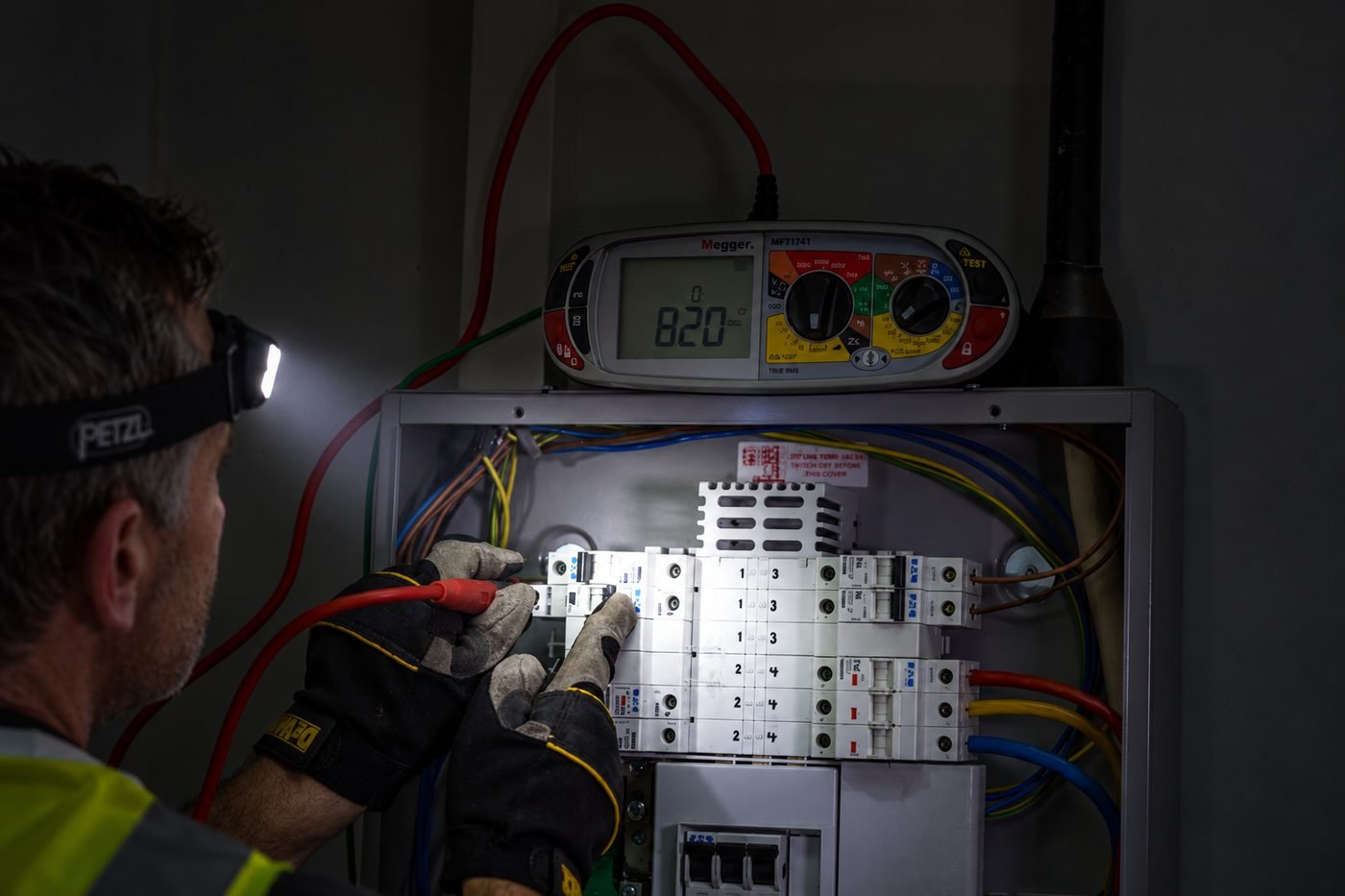
That is why the existing circuits are tested before the work is priced rather than after the board is fitted. Insulation resistance, continuity, polarity and the earthing and bonding arrangement are all checked, so you know in advance whether a circuit needs repair alongside the board, and nothing turns into a surprise halfway through the job.

What Happens on the Day of the Changeover

The power is off while the board is changed, so we agree a start time that suits you and give you a realistic idea of how long the supply will be down. The old unit is removed, the meter tails, main earth and bonding conductors are checked, and the new board is mounted and wired in.

Each circuit is reconnected onto its own protective device, tested, and then labelled clearly, so anyone looking at the board later can see which switch belongs to which part of the property. We take the old equipment away, tidy up behind us and walk you through the new board before we leave.

Regulations, Certification and Notification

New consumer units are installed to the current wiring regulations, BS 7671. That covers the protective devices chosen for each circuit, surge protection where it applies, the enclosure itself, and the condition of the earthing and the main protective bonding to your gas and water services, which is often the part an older installation is missing.

Replacing a fuse board in a home is notifiable work. We are Part P registered and fully insured, and the installation is tested and certified on completion. You are left with the paperwork an insurer, a letting agent, a buyer’s solicitor or the next electrician to open the board will expect to see.

Response times

What Governs the Wait, and How a Fault Spreads

The honest answer is that it depends, and it is fairer to tell you what it depends on. Where the property sits in Sussex or the wider South East matters, as does the time of day, whether anyone can be there to let an engineer in, and how dangerous the symptoms you describe sound. You are told plainly where things stand when you call, rather than handed a figure that might not hold.

The phone is answered 24 hours a day, every day of the year, nights, weekends and bank holidays included, and the call itself does real work. Describing what you can see, hear and smell lets us sort a genuine hazard from work that is better booked in. A burning smell, scorching, sparking, a shock felt from a tap, or water that has reached wiring is treated ahead of a single dead socket.

Some faults are not ours to fix, and saying so on the phone saves a wasted visit. If the whole street is dark, the fault sits on the supply side and belongs to the distribution network operator, reported free on 105. Where it is yours, turn the installation off at the main switch if it is safe to reach, leave anything scorched or wet alone, and stop resetting a breaker that will not hold.

None of that is caution for its own sake. A loose or high resistance connection gives off heat whenever the circuit is loaded, and that heat carbonises the terminal and the insulation around it, which raises the resistance further, which makes more heat again. An MCB does not see it, because it protects the cable against overload and short circuit rather than the quality of a termination. What starts at one accessory can end as cable to replace and a wall to make good.

A shock works differently. Insulation that has failed can put metalwork at a voltage it should not be at, and a circuit protective conductor that is no longer continuous is what leaves it there, because fault current has no path back to operate the protective device. Completing that path takes a person, which is why what seems harmless in a dry room is another matter in your bathroom or outdoors. Equipment suffers too, since a lost neutral can leave appliances seeing an abnormal voltage.

Inside a modern consumer unit

Our process

How We Work, from First Visit to Final Certificate

  1. 01

    Your Call, Day or Night

    You can call us at any hour, every day of the year, including bank holidays. In an emergency we ask what has stopped working and whether anything is hot, sparking or smelling of burning, and tell you what to switch off until we arrive. Booked work, from a landlord certificate to solar panels or EV charging, starts on the same call.

  2. 02

    Arrival & Making Safe

    A Part P registered and fully insured engineer attends and makes the installation safe before anything else. Where there is a risk, the affected circuit or your fuse board is isolated, and anything that cannot be put right straight away is left in a safe condition. Planned work follows the same rule: circuits are proved dead before they are worked on.

  3. 03

    Diagnosis by Testing, Not Guesswork

    We work from readings rather than assumptions. Testing can include continuity, insulation resistance, polarity, earth fault loop impedance and RCD testing. The results show where a fault sits, what an installation can safely take, and whether a problem is inside your property or on the incoming supply, which belongs to the distribution network operator and is reported free on 105.

  4. 04

    Your Options & the Cost

    Before any repair or installation begins, we explain the options: what needs doing now, what can safely wait, and whether repair or replacement is the sensible choice. Quotes are free and carry no obligation, and nothing goes ahead until you agree the price, so there are no call-out surprises. If parts or a return visit are needed, we tell you then.

  5. 05

    Carrying Out the Work

    The same qualified engineers who took your call carry out the work, whether that is an overnight repair, a fuse board replacement, new lighting, smoke and heat alarms, a rewire, an inspection, solar panels or an EV charging point. It is done to the current wiring regulations, with cables and accessories fixed securely and neatly, and disruption kept to a minimum.

  6. 06

    Final Testing & Certification

    Before we leave, the work is tested and checked in operation, and the working area is left tidy. You are told plainly what was done and anything worth keeping an eye on. Certification is supplied where the work calls for it, so you hold a written record of what was carried out and the results of the testing.

Common questions

Frequently Asked Questions

How do I know whether I need a new fuse board or just a repair?

We test before recommending anything. A single faulty protective device can sometimes be changed on its own, but a rewireable board, a cracked or scorched enclosure, or a unit with no residual current protection is normally replaced rather than patched. You will be told which of those applies to yours, and why.

How long will my power be off while the board is changed?

The supply is off for the working part of the visit rather than the whole of it, and most of that time goes on reconnecting and testing each circuit in turn. We will give you a realistic idea before we start, so you can plan around freezers, home working or anything on a timer.

Why would a fault appear as soon as a new board is fitted?

A modern board detects earth leakage that an old fuse box simply ignored. Damp in an outside light, aged cable insulation or a neutral borrowed between two circuits will trip the new device straight away. Testing the circuits before the changeover is how those problems are found in advance rather than on the day.

Is a new fuse board notifiable, and what paperwork do I get?

Replacing a consumer unit in a dwelling is notifiable work. We are Part P registered and fully insured, the board is installed and tested to the current wiring regulations, and you receive certification for the work with a schedule of circuits and test results to keep with your property records.

More from us

Other Electrical Services

Get in touch

Talk to an Electrician Today

Contact us today on 01273 000 247 for help, advice or a free no-obligation quote.

Contact Us