Landlord Safety Certificates Across Sussex and the South East

Landlord services

Electrical Installation Condition Reports for Rented Homes in Sussex

If you let a property in England, the electrical installation has to be inspected and tested by a qualified person at least every five years, and the report given to your tenants. That report is the Electrical Installation Condition Report, usually shortened to EICR and often called a landlord safety certificate. We carry these out on rented and residential premises throughout Sussex and the South East.

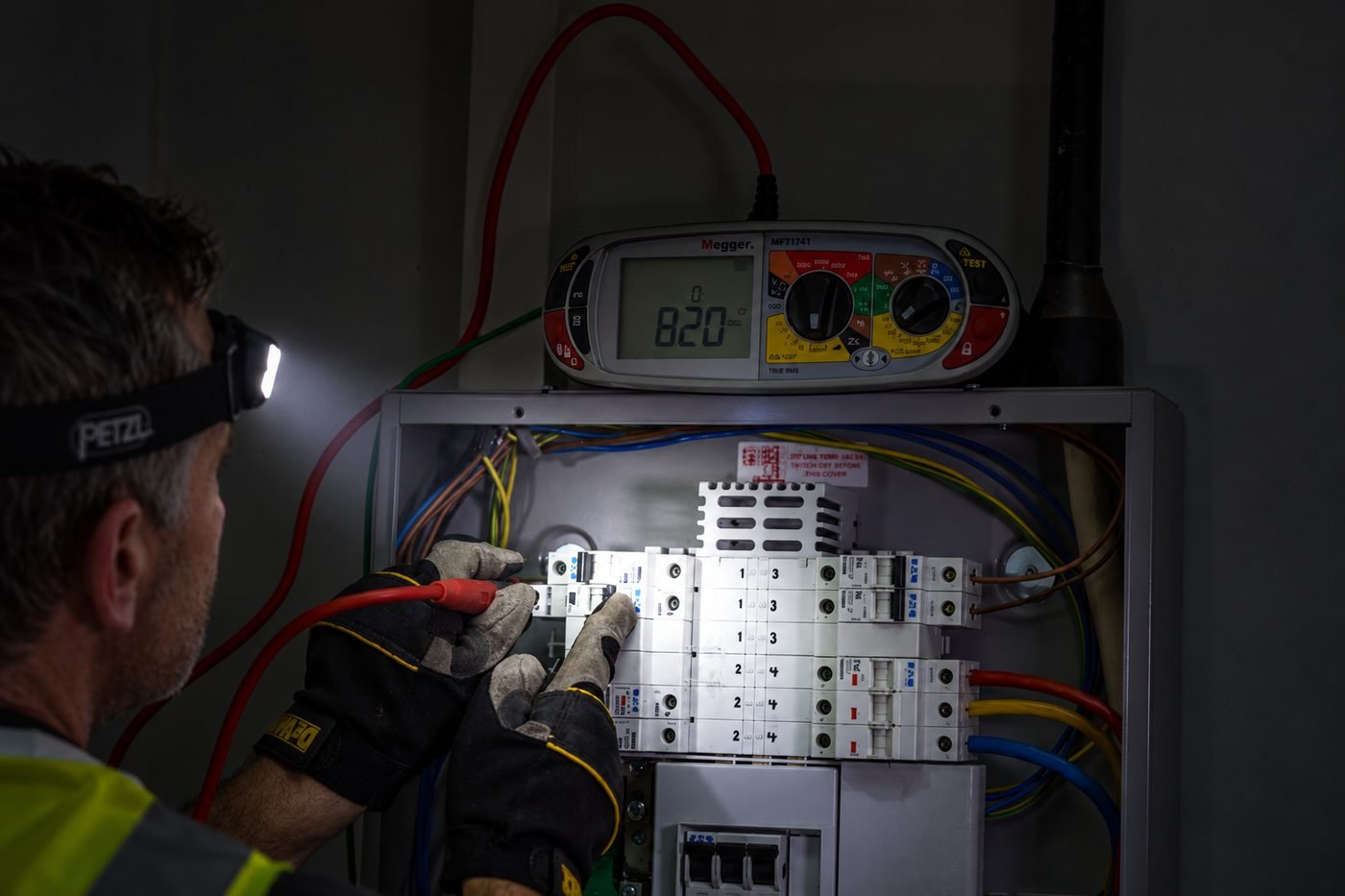
The inspection covers the fixed wiring: the consumer unit, circuits, earthing and bonding, sockets, switches and fixed accessories. Our engineer checks the installation by eye, then carries out dead and live testing to measure insulation resistance, circuit continuity, earth fault loop impedance and RCD operation. Anything found is recorded and coded, so you can see exactly what is safe and what is not.

Tenanted properties are easier to organise when someone deals with the tenant directly, so we are happy to contact them, agree a time that suits and give the notice they are entitled to. Once the visit is done, the report is written up and sent to you promptly, ready to pass to your tenant, your letting agent or the council if it is asked for.

Landlord Safety Certificates by CK Electrical

About this service

What an EICR Involves

When a Landlord Certificate Is Required

Under the Electrical Safety Standards in the Private Rented Sector (England) Regulations 2020, a report is needed before a new tenancy begins and then at least every five years, or sooner if the previous report set a shorter interval. Councils commonly ask for one as a condition of an HMO licence, and letting agents usually want a current report on file before a tenant moves in.

It is also worth booking one when you buy a property to let, when a tenancy changes hands, or after any significant work on the installation. If you are unsure when your last inspection was, the date and the recommended date for the next inspection will be printed on the previous report.

What Happens on the Day of the Inspection

The power has to be switched off for part of the visit, so we let the tenant know in advance and work through the circuits in a sensible order. We need access to the consumer unit and to every room, along with the loft, cupboards and any outbuildings on the same supply.

How long it takes depends on the size of the property and the number of circuits, and on how much is boarded over or hard to reach. Where something cannot be inspected, that limitation is written into the report rather than left unsaid, so you know what was and was not covered.

Reading the Report and Its Observation Codes

The report is marked either satisfactory or unsatisfactory. Anything that fails is given a code: C1 means danger is present and needs putting right straight away, C2 means potentially dangerous, and FI means further investigation is required. Any of those three makes the report unsatisfactory. C3 is an improvement recommended, and does not on its own fail the installation.

We go through the findings with you rather than leaving you with a list of codes to decipher. You also get the schedule of circuits and the schedule of test results, which is what the next electrician will want to see when the property is inspected again.

If the Report Comes Back Unsatisfactory

If the report is unsatisfactory, the rules for rented homes in England give you 28 days to put the faults right, or less where the report states a shorter period. Written confirmation that the work has been completed then has to go to the tenant and to the local authority.

Because we are working electricians rather than an inspection-only service, the remedial work can be quoted and carried out by the same team, with the price explained before anything starts. Common findings are a consumer unit with no RCD protection, missing bonding to gas and water, or a circuit with poor insulation resistance.

Response times

What Governs the Wait, and How a Fault Spreads

The honest answer is that it depends, and it is fairer to tell you what it depends on. Where the property sits in Sussex or the wider South East matters, as does the time of day, whether anyone can be there to let an engineer in, and how dangerous the symptoms you describe sound. You are told plainly where things stand when you call, rather than handed a figure that might not hold.

The phone is answered 24 hours a day, every day of the year, nights, weekends and bank holidays included, and the call itself does real work. Describing what you can see, hear and smell lets us sort a genuine hazard from work that is better booked in. A burning smell, scorching, sparking, a shock felt from a tap, or water that has reached wiring is treated ahead of a single dead socket.

Some faults are not ours to fix, and saying so on the phone saves a wasted visit. If the whole street is dark, the fault sits on the supply side and belongs to the distribution network operator, reported free on 105. Where it is yours, turn the installation off at the main switch if it is safe to reach, leave anything scorched or wet alone, and stop resetting a breaker that will not hold.

None of that is caution for its own sake. A loose or high resistance connection gives off heat whenever the circuit is loaded, and that heat carbonises the terminal and the insulation around it, which raises the resistance further, which makes more heat again. An MCB does not see it, because it protects the cable against overload and short circuit rather than the quality of a termination. What starts at one accessory can end as cable to replace and a wall to make good.

A shock works differently. Insulation that has failed can put metalwork at a voltage it should not be at, and a circuit protective conductor that is no longer continuous is what leaves it there, because fault current has no path back to operate the protective device. Completing that path takes a person, which is why what seems harmless in a dry room is another matter in your bathroom or outdoors. Equipment suffers too, since a lost neutral can leave appliances seeing an abnormal voltage.

Inside a modern consumer unit

Our process

How We Work, from First Visit to Final Certificate

  1. 01

    Your Call, Day or Night

    You can call us at any hour, every day of the year, including bank holidays. In an emergency we ask what has stopped working and whether anything is hot, sparking or smelling of burning, and tell you what to switch off until we arrive. Booked work, from a landlord certificate to solar panels or EV charging, starts on the same call.

  2. 02

    Arrival & Making Safe

    A Part P registered and fully insured engineer attends and makes the installation safe before anything else. Where there is a risk, the affected circuit or your fuse board is isolated, and anything that cannot be put right straight away is left in a safe condition. Planned work follows the same rule: circuits are proved dead before they are worked on.

  3. 03

    Diagnosis by Testing, Not Guesswork

    We work from readings rather than assumptions. Testing can include continuity, insulation resistance, polarity, earth fault loop impedance and RCD testing. The results show where a fault sits, what an installation can safely take, and whether a problem is inside your property or on the incoming supply, which belongs to the distribution network operator and is reported free on 105.

  4. 04

    Your Options & the Cost

    Before any repair or installation begins, we explain the options: what needs doing now, what can safely wait, and whether repair or replacement is the sensible choice. Quotes are free and carry no obligation, and nothing goes ahead until you agree the price, so there are no call-out surprises. If parts or a return visit are needed, we tell you then.

  5. 05

    Carrying Out the Work

    The same qualified engineers who took your call carry out the work, whether that is an overnight repair, a fuse board replacement, new lighting, smoke and heat alarms, a rewire, an inspection, solar panels or an EV charging point. It is done to the current wiring regulations, with cables and accessories fixed securely and neatly, and disruption kept to a minimum.

  6. 06

    Final Testing & Certification

    Before we leave, the work is tested and checked in operation, and the working area is left tidy. You are told plainly what was done and anything worth keeping an eye on. Certification is supplied where the work calls for it, so you hold a written record of what was carried out and the results of the testing.

Common questions

Frequently Asked Questions

How often does a rented property need an EICR?

For a private rented home in England the installation must be inspected and tested at least every five years, and before a new tenancy where the existing report has run out. If the previous report recommends a shorter interval than five years, that earlier date is the one to work to.

Do I have to give my tenant a copy of the report?

Yes. A copy goes to the existing tenants, normally within 28 days of the inspection, and to a new tenant before they move in. The local authority can also ask you for a copy. We send the report to you in a form you can forward on without any fuss.

My tenant is out at work all day, can you still get in?

Usually, yes. Give us the tenant’s contact details and we will arrange the appointment with them directly, including the notice they are entitled to before a visit. Our engineers work around the clock, so a time outside normal office hours can often be arranged, and we keep you posted.

Does the report cover the appliances I supply?

No. The report covers the fixed installation: the wiring, circuits, consumer unit, sockets, switches and fixed equipment such as an electric shower or cooker. Portable items you supply, like a kettle or a washing machine, come under portable appliance testing, which is a separate check. Ask us if you are unsure which one you need.

More from us

Other Electrical Services

Get in touch

Talk to an Electrician Today

Contact us today on 01273 000 247 for help, advice or a free no-obligation quote.

Contact Us